YouTube’s Bold Move: Auto-Detection of AI Content
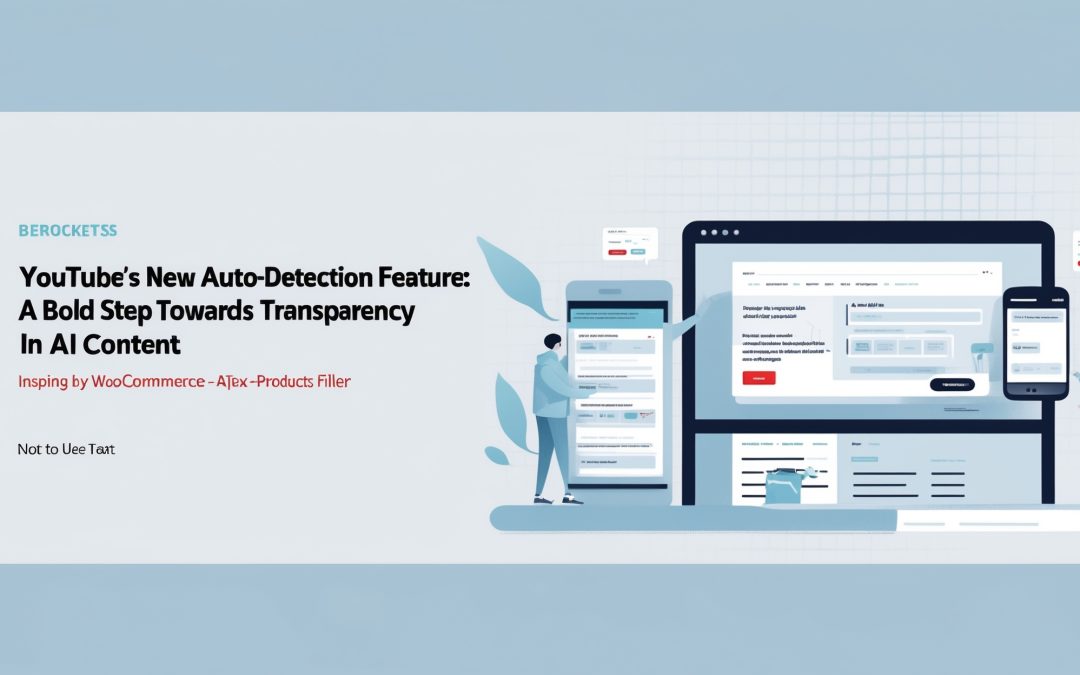
Ah, YouTube. That digital swamp where the everyday genius and the absurd converge, offering us endless hours of entertainment, education, and, occasionally, existential dread. Recently, however, YouTube has decided to yank back some of the chaotic blurred lines by introducing automatic detection for undisclosed photorealistic AI content. It’s as if they’ve finally spotted the proverbial elephant in the room: the ever-expanding presence of AI-generated videos. And like any self-respecting platform, they’re attempting to address the dilemma head-on. 🎥
The Problem with AI Content
Let’s face it: we’ve all seen videos that appear utterly real but were birthed from the cold, unfeeling circuits of artificial intelligence. While the brilliance behind AI technology is undeniably fascinating, the implications it carries are equally unsettling. I know from my experience that a world where reality and digital creation blend seamlessly can lead to misinformation and a skewed perception of reality. In a time when people are already grappling with fake news and the blurred lines between fact and fiction, adding AI-generated content to the mix presents a slippery slope that many may find perilous.
Yet, while we ponder whether to trust a talking cat or the latest conspiracy theory about celebrity lizard people, YouTube has chosen to shine a spotlight on these murky waters. By moving its AI disclosure labels to more visible spots and employing a detection system, they’re attempting to give viewers a fighting chance against the pixelated charlatans hiding behind cleverly crafted visuals.
Understanding the New Changes
So just what does this new auto-detection feature entail? Well, for starters, it’s a signal to creators: if you’re letting AI take the wheel, you’d better disclose it. Because let’s be honest, who doesn’t appreciate a joyful dose of transparency with a side of content? I understand that creators often strive for maximum engagement and impact, but there’s a world of difference between pulling at the heartstrings and pulling the wool over our eyes.
Moreover, this move doesn’t just serve to protect the audience; it’s a gentle nudge to creators themselves as well. Ensuring that audiences are aware of what they’re watching cultivates a healthier digital ecosystem. I can already envision some creators trying to stretch the rules, but the detection tool should prove helpful in clamping down on such shenanigans.
The Tug of War Between AI and Authenticity
Let’s not mince words: the rise of AI in content creation has become a double-edged sword. I think about the creativity that AI can unleash—its ability to assist artists, streamline processes, and even open new avenues for expression. But this has come, inevitably, hand-in-hand with a few unsavory effects. From deep fakes meant to slander public figures to the sea of cookie-cutter TikTok trends that pop up daily, the line between original content and AI simulation can feel alarmingly indistinct.
YouTube’s new approach could be a herald of change for the industry. With the sheer volume of content uploaded daily, relying solely on human moderation is like trying to drain the ocean with a teaspoon. Introducing a robust auto-detection system is not just about catching the bad guys, but about setting a precedent. It’s saying implicitly, “Your choice to be creative shouldn’t come at the cost of authenticity.”
And authenticity feels more vital now than ever. In 2023, where influencers, content creators, and brands jockey for our attention every waking moment, let’s be real: who wants to engage with content that may not even originate from a human? The notion of influencers becoming less relatable and more like well-scripted bots could eventually backfire. It’s totally feasible that many viewers may simply opt to tune out entirely.
Conclusion: A Step Forward
As I ponder the implications of this new auto-detection feature, I can’t help but feel a sense of optimism. Sure, it may seem like a small step in the grand scheme of things, but it could just be a monumental leap towards a more responsible YouTube landscape. Giving viewers the ability to discern what deserves their clicks—not just in terms of entertainment but in truth—this feels like an indispensable move.
So, as YouTube charges ahead with its mission to identify and label undisclosed AI content, I’m curious to see how this dynamic plays out. Will creators rise above the challenge and advocate for transparency? Or will they fold under the pressure of maintaining relevance in a rapidly evolving landscape? Whatever happens, one thing is clear: we need to keep talking about AI content, its implications, and our digital reality, lest we drift into a void where we can’t tell the AI from the authentic.
After all, in an era where anything can be fabricated with the click of a button, we owe it to ourselves to keep our readers informed, discerning, and—if I may be so bold—slightly cynical. One shift at a time, let’s carve out a digital space that truly celebrates creativity and authenticity. 🧐