Wikipedia Gets a Grip on AI: Why Human Touch Matters
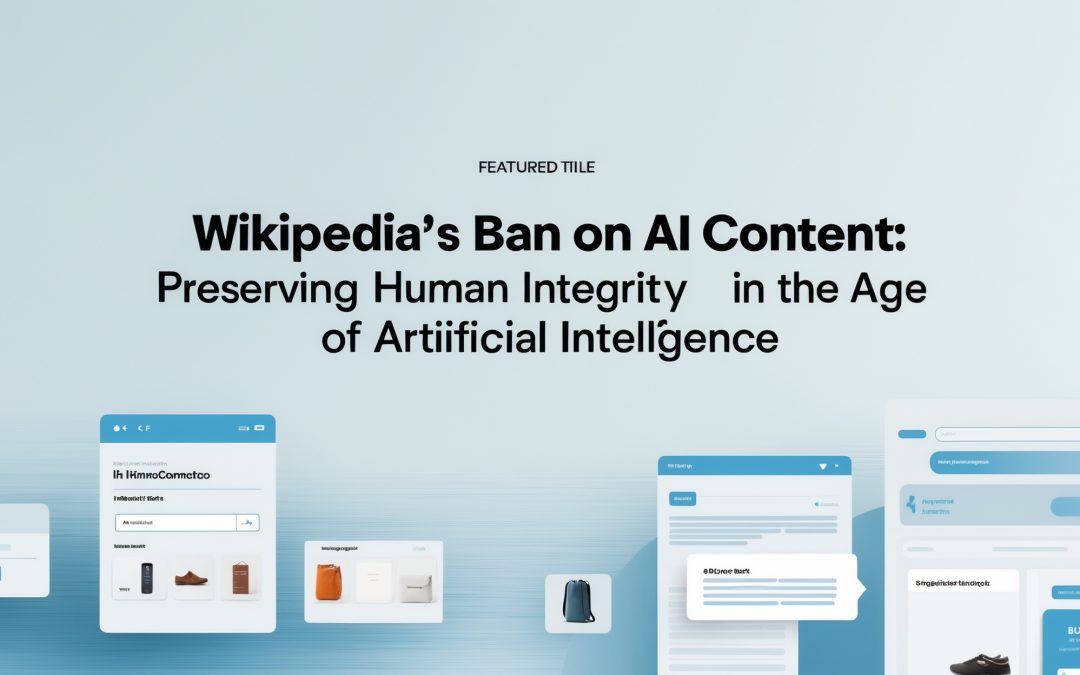
As I sit here pondering the implications of Wikipedia’s latest decision to ban AI-generated content, I can’t help but feel a sense of relief. In an age where machines have begun writing news articles, crafting poems, and even generating entire novels, it seems almost revolutionary that Wikipedia would take a stand in favor of that most elusive of qualities: humanity. They have recently published new guidelines that prohibit the use of AI, specifically Large Language Models (LLMs), for writing or rewriting articles. There are noted exceptions, but let’s delve into the main point here—I find it refreshing that a platform built on the foundation of human knowledge and collaboration is placing a barrier against the encroaching realm of AI.
The Unmistakable Value of Human Input
I mean, when you think about it, Wikipedia isn’t just an information aggregator; it’s a collection of human contributions—voices, perspectives, and interpretations that reflect our collective understanding of the world. Each edit carries with it the quirks and nuances of human experience, a reality that AI-generated text simply cannot replicate. So, when Wikipedia declares a ban on AI-generated content, they’re not just protecting their content quality; they’re preserving the integrity of the very community that birthed the platform.
Now, I know some will raise their eyebrows and claim that technology can enhance the writing process. But let’s be honest, we’re not talking about mere spell-check here. The heart of writing is about more than just getting the words right—it’s about context, emotion, and the essence of thought. ✍️ And this is the crux of the issue; AI lacks the intuitive grasp of human experiences that can’t be mechanized.
Two Exceptions: A Tiny Glimmer of AI?
The guidelines do allow for two exceptions, which appear at odds with the general sentiment. I can’t help but wonder: Why even allow AI in certain situations? Perhaps they are paving the way for a harmonious coexistence, but I can’t shake the feeling that a slippery slope looms ahead. AI isn’t just an assistant that makes our tasks easier; it’s a potential usurper. Uncomfortably reminiscent of some dystopian scenario, isn’t it?
One of the exceptions seems designed to accommodate legitimate use cases—cases where AI-generated content may serve as a first draft or provides a basis for further human editing. While I get it, the distinction almost feels patronizing. If we’re relying on AI to lay down the initial groundwork, where does that leave our responsibility as custodians of knowledge? Are we genuinely evaluating the information being curated, or are we letting a machine do the thinking for us?
What’s at Stake?
The stakes are exceedingly high. In a world spilling over with misinformation, the importance of reliable, verifiable content cannot be overstated. By drawing a line in the digital sand, Wikipedia is taking a principled stance against the risks of relying too heavily on artificial inputs. I’ve seen firsthand how easy it is to fall into the trap of accepting AI-generated content as legitimate. It’s almost sinister how convincing AI can be, crafting narratives that seem entirely plausible but are fundamentally devoid of authenticity. Authenticity is the foundation of trust, and Wikipedia knows this intimately.
I can’t help but feel a touch of nostalgia for those early days of Wikipedia, when contributors were limited to human editors—passionately editing, rewriting, and collaborating. Back then, it was almost community art, a tapestry of knowledge woven together by real people. Now, fast-forward to today: AI is an omnipresent specter threatening to mar the authenticity and spontaneity that made Wikipedia a beloved treasure.
The Takeaway
So, here’s what I believe: If we let machines take the reins, we might end up losing more than just well-crafted articles; we risk losing the essence of what makes platforms like Wikipedia so valuable. I think it’s a noble undertaking to keep the AI at bay within the Wikipedia walls, however complicated the reasons might seem to the outside world. Humanity must retain the lead role in crafting our collective narrative.
Sure, I understand the allure of expediency that comes with AI generation, especially in a fast-paced world craving instant information. But let’s challenge ourselves to tap into that endless well of human creativity that sets us apart from our digital counterparts. 💡 Wikipedia’s bold stance is a clarion call: the importance of human contribution and thought is irreplaceable. Trust me, it’s a decision we all should celebrate as we take a step back and remember—to err is human, and that’s precisely what makes knowledge, especially collective knowledge, so enriching.