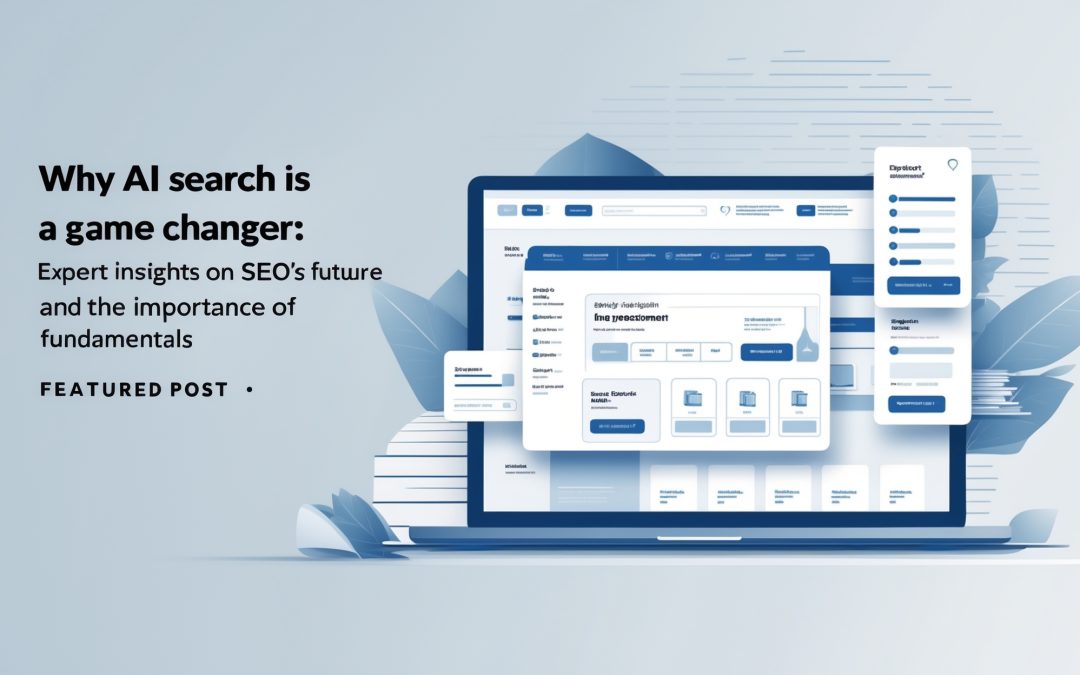
Why AI Search Isn’t Overhyped: Insights from a 30-Year SEO Expert
I recently had the opportunity to dive into an enlightening interview with Carolyn Shelby, a seasoned 30-year veteran of the SEO landscape. You know, the kind of expert who knows where all the bodies are buried in the digital marketing world? Her insights on AI search are fascinating and, to my surprise, rather reassuring. Despite the constant buzz around AI redefining the SEO game, I’ve come to realize that it’s not the doomsday scenario many predict. 🎉
The Reality of AI in SEO
Let’s all take a collective breath and agree on one thing: the hype surrounding AI search is not as terrifying as some would have you believe. What I gathered from Shelby’s thoughts is that AI is, in fact, enhancing how we approach SEO rather than demolishing it entirely. While it might sound appealing to picture a world where automated systems run the show, there’s a stark reality we have to confront: technical fundamentals still hold the keys to success.
In a world quickly gravitating toward AI, it’s easy to forget the importance of rock-solid technical skills. Shelby’s assertion that “the fundamentals matter more than ever” resonates profoundly with me. It’s like baking a cake; if you don’t have the right ingredients—flour, eggs, sugar—you can throw all the fancy decorations on top, but it ultimately ends up a sad mess.
The Importance of Foundations
So, let’s talk about these essential foundations. The ongoing evolution of search engines means understanding how algorithms prioritize content is key. The explosive growth of AI could give the illusion that beautifully-crafted, keyword-rich articles are enough to rank high, but as we learned from Shelby, it’s simply not true. Quality content, paired with proper indexing, site speed, mobile optimization, and more, is just table stakes.
I mean, who doesn’t want to be a top contender in Google’s vast digital arena? Implementing technical SEO practices enables you to stand out among the digital clamor. It’s not enough anymore to write a blog post and hope for the best; you must actively engage in optimization that factors in user experience and site performance. 🚀
But What About AI?
Now, you might be wondering; “Did we really need an interview like this to understand AI’s impact?” The truth is, while AI does indeed offer valuable tools for optimizing our work, we must also be discerning about its limitations. I think it’s a double-edged sword; it can help streamline research processes and provide insights into analytics, but it cannot replace human creativity and insight. We, as experts, need to wield these new tools wisely.
As Shelby wisely points out, AI can mimic certain processes, but can it truly understand the nuances of tone, context, and audience emotional responses? I don’t think so. To me, that’s where we, the experts, come in. We’re still the ones creating the magic. ✨
Navigating Google’s Strategic Position
I also found Shelby’s reflections on Google’s strategic positioning particularly revelatory. It turns out Google is not merely a neutral entity floating atop the digital seas; it actively shapes the narrative surrounding search. The introduction of AI tools and features isn’t designed out of goodwill; it’s about keeping users engaged and ensuring that they come back for more. Just as we must evolve, so must the engines we rely on.
Let’s face it: Google’s algorithms are incredibly smart, constantly learning and adapting. If we don’t maintain our fundamental skills, we risk being left in the dust as search engines continue to refine their understanding of user intent and satisfaction. The race isn’t just about speed; it’s about strategy—how we adapt our tactics to keep pace with this evolving landscape.
Looking Ahead: The Future of SEO
In closing, Carolyn Shelby’s insights reminded me that while AI is undeniably reshaping aspects of SEO, it’s not a silver bullet. Those of us navigating this terrain need to hone our technical skills continuously. The foundational aspects of SEO are not just relevant; they are critical. Whether it’s ensuring your site is mobile-friendly or understanding schema markup—the building blocks can’t be overlooked.
So, let’s embrace AI not as a replacement but as an enhancement—an extra layer atop our well-constructed SEO cake. I believe that marrying AI capabilities while clinging to our fundamental skills will be the key to flourishing in this brave new world. 🌍
Let’s not lose sight of what actually matters. After all, a successful SEO strategy is—and always will be—anchored in a solid understanding of core principles, with AI serving as an effective ally, rather than a misguided replacement.