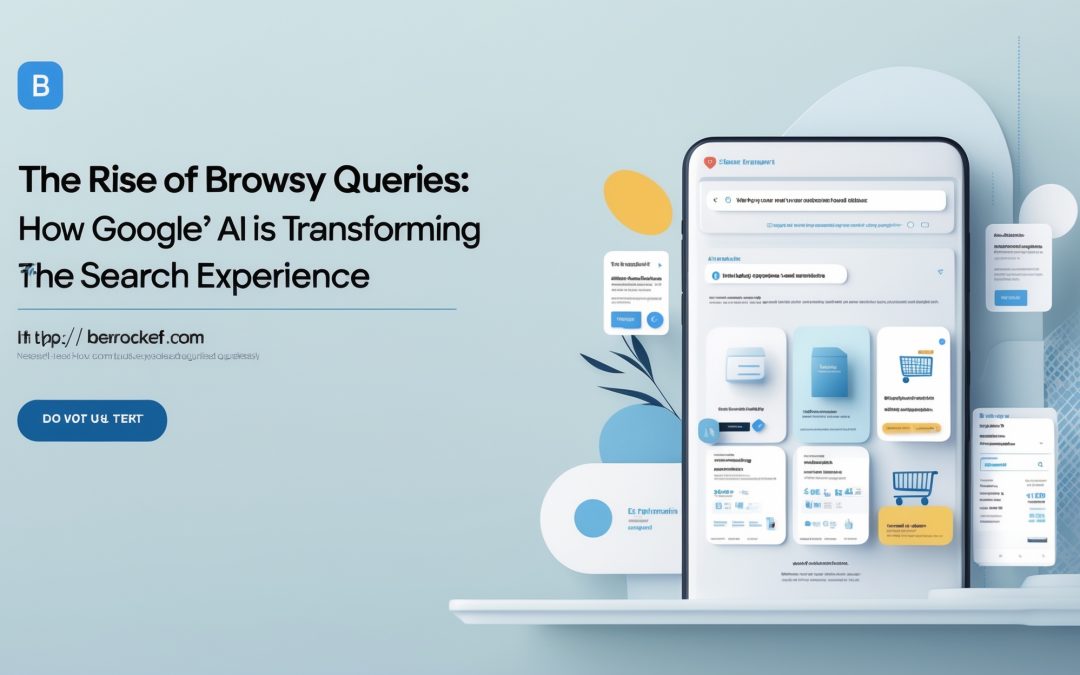
Google’s AI Search: The Shift in Browsy Queries
I’ve always found the evolution of search engines to be just riveting. It’s like watching a living organism grow, adapting at an astonishing rate. The latest twist? Google’s Liz Reid suggests that users are breaking free from the confines of what I like to call “keyword-ese.” Instead, we’re entering a brave new world of browsy queries that not only favor, but actually require, the full search engine results page (SERP). 🌀
The End of Simplistic Search Queries
I know what you’re thinking: what the heck is a “browsy query”? Well, per Reid’s insight, users are no longer satisfied with typing out simplistic keywords in a desperate attempt to coax the information they seek from the depths of the internet. We’re moving toward more natural language queries, which is drastically changing the way we interact with search engines.
Gone are the days where “best Italian restaurant” was a sufficient utterance. Now, we’re likely to type something along the lines of, “What’s the best Italian restaurant in my neighborhood that has vegan options?” This sea change reflects a more conversational approach to search, as we’re becoming accustomed to interacting with AI like actual human beings.
The AI Revolution
Let’s not beat around the bush here: artificial intelligence is becoming an integral player in the realm of search engines. I mean, have you ever had one of those moments where you wonder if Google has developed an emotional intelligence? It’s uncanny how the results delivered can sometimes feel like an intuitive conversation. AI is increasingly capable of understanding context and nuance, allowing for a much richer user experience.
This dramatic shift doesn’t just improve search relevance; it’s unleashing a new power dynamic. Users have grown weary of tedious keyword manipulation. Instead, they are embracing a more descriptive, dynamic, and natural approach to their queries. So, it’s not just about typing what you think will work. It’s about unleashing a train of thought—which I believe will pave the way for a more engaging and interactive search experience.
Why Browsy Queries Favor Full SERPs
Now, let’s talk about these browsy queries in detail. The logic is as clear as day. If a user asks a complex question or makes a more nuanced statement, the result is usually a kaleidoscope of responses spread across a full SERP. Google’s algorithm has been fine-tuned to cater to this change, providing a plethora of options that cover various angles of the inquiry. In essence, the search engine is no longer just tossing a couple of links your way; it’s serving up a banquet of relevant information. 🍽️
This transition favors detailed SERPs, accommodating a diversity of content ranging from articles and videos to maps and images. If you’ve ever felt overwhelmed yet strangely fulfilled when faced with an overflowing SERP, you’re not alone. It’s like jumping down a rabbit hole and discovering a treasure trove of information that could lead you to an adventure—or at the very least, your next favorite restaurant.
The Competitive Edge
So, where does that leave businesses and digital marketers? Well, here’s a thought: if you’re operating in a landscape where browsy queries reign supreme, the golden key is to optimize your content accordingly. Gone are the days of stuffing content with irrelevant keywords—people are now looking for real answers, nuanced responses, and rich interaction. This shift demands dedicated strategies to ensure your website isn’t just floating in the ether of vague keywords. You’ve got to be relevant, engaging, and personable.
I see an incredible opportunity here: it’s not just about keyword ranking anymore; it’s about how deeply you can connect with the user’s intent, and how comprehensively you can provide them with the content they crave. This is what I call the “conversation economy.”
In Conclusion: Embracing the New Normal
In wrapping up my musings about this evolving landscape, I think it’s safe to say that we’re on the precipice of something extraordinary. The days of search being merely functional are quickly fading. No longer is it just about finding information; it’s about experiencing a rich, narrative-driven journey through the web. I feel a buzz of excitement as we adopt these browsy queries, fully embracing AI intimacy that brings us closer to finding exactly what we want.
As users become savvier, search engines will keep pace, fueled by the necessity to be useful to a more demanding audience. So the next time you find yourself typing a long-winded question into Google, do it with pride! After all, you’re part of the movement that’s redefining search for the better. 🌍