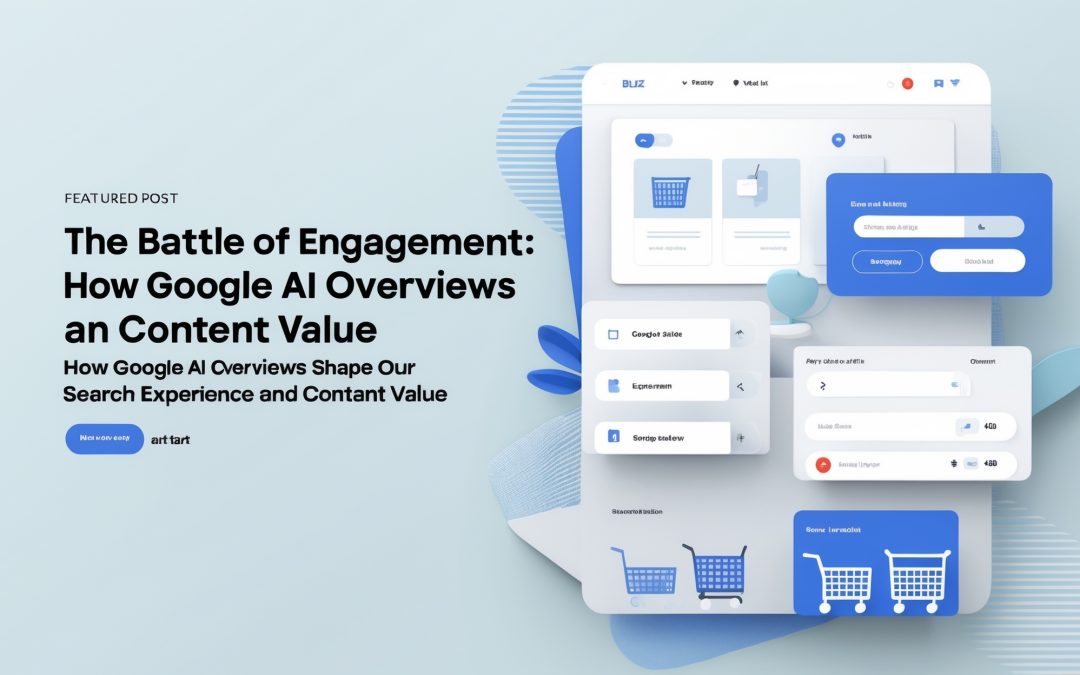
The Curious Case of Google AI Overviews: Engagement is Key
You may have noticed something odd about your Google search results recently—like a mysterious stranger slipping into an otherwise mundane party. It’s the appearance (or shocking absence) of AI Overviews. These concise summaries, or what some might affectionately call ‘spark notes’ for the internet, have been seemingly selective in their attendance. So, what in the world is going on? Why do these AI Overviews pop up for some searches, while others are left in the dark? I decided to dig deep into this quagmire of algorithms and user engagement, and trust me, the results were as baffling as they were intriguing. 🤔
Engagement: The Golden Ticket
Picture this: you’re at a bustling bazaar—everyone’s vying for your attention, but only a select few have the audacity (and charm) to draw you into their stalls. This is fundamentally how Google’s AI Overviews operate, according to none other than Robby Stein, a figurehead in Google’s search department. The undercurrent of this whole situation is engagement. If you don’t click, if you don’t engage, you might as well be invisible.
I find this approach both fascinating and incredibly frustrating. On one hand, it seems to make sense. Google is essentially rewarding content that draws users in. But on the other, it leaves some genuinely worthy searches gasping for air, simply because they weren’t clicked on enough. This raises the question: is Google inadvertently judging content by popularity over quality?
The Quality vs. Quantity Conundrum
As someone who constantly documents the bizarre realities of our digital lives, I cannot help but squirm at the thought of content being validated by sheer user clicks. If content is merely a race to the top based on engagement metrics, what happens to those niche subjects that might be crucial for deep, analytical thought? Why should the wisdom of an insightful article be thrown to the wayside simply because it didn’t catch enough ‘likes’?
Let’s face it: many intriguing queries often lead to results that simply don’t engage the masses. Only the most click-worthy, the most sensational, seem able to break through the noise of the search engine’s feedback loop. This algorithmic favoritism turns the internet into a popularity contest that leaves valuable information lurking in the shadows.
The Illusion of Choice
I understand why Google operates in this manner. After all, they are a business; they need users to engage with their product. The more clicks they get, the more advertisements they can serve, the higher their revenue. Yet there is a nagging discord within me about how much our choices are affected by such a system. It creates an illusion of varied options where some results are merely invisible. AI Overviews seem to curb that notion further, building an additional layer of selective visibility.
In essence, Google has become an arbiter of information, sifting through data like a modern-day King Midas—their golden touch transforming clicks into search results, but at what cost? It leaves me pondering about the limits of engagement. Are we, as users, now slaves to a system where visibility equates to value? 💯
How Does This Affect Us?
I think most users are unaware of this hidden algorithm, or at least unaware of its ramifications. It is plausible that many people trust Google to deliver the best results based on their queries. We operate on instinct; we feel a sense of entitlement that each search must serve us with equal thoroughness. But the reality is more complicated. The AI Overviews that feel like they’ve been tailor-made for us are, in fact, the product of a dynamic feedback loop tethered tightly to our own engagement patterns.
User interaction is what propels these AI summaries onto the main stage of search results. Isn’t it both amusing and horrifying to think that an algorithm could potentially guide our understanding?
Looking Ahead
As we ponder the implications of Google’s engagement-based system, I grapple with whether it can evolve into something far more equitable. This raises a multitude of questions surrounding the future of information dissemination. Will we collectively learn to engage responsibly, ensuring that meaningful content is not sacrificed on the altar of clickbait? Or are we heading towards an internet ruled by ubiquitous ‘hot takes’ that ultimately drown out authentic discourse?
As a self-proclaimed observer of the digital landscape, I can only hope that we strike a balance between engagement and substance. Because, let me tell you, if we simply chase the parade of flashy overviews without understanding the ideas behind them, we risk becoming passive participants in a narrative that we no longer control.
Just remember: next time you search, don’t just click; think. 🧐