The Agentic Web: Navigating the Future of Customer Engagement
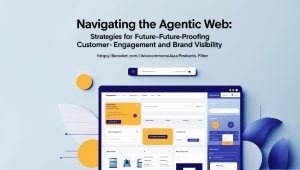
I must admit, as a staunch advocate for understanding technology’s role in our lives, the rise of AI agents has made me both fascinated and terrified in equal measure 🤖. This AI-powered march into the hearts and minds of consumers—an evolution I term the “Agentic Web”—is reshaping the very fabric of brand visibility strategies. Let’s dissect what this means and how it affects your brand.
The Emergence of AI Agents
Imagine a scenario where your customers don’t just browse your products but let AI agents do the heavy lifting for them. Suddenly, the process of searching for information, comparing prices, or even purchasing is no longer a human endeavor but a realm inhabited by insatiable algorithms. These AI agents are becoming increasingly adept at understanding customer preferences, often better than the consumers themselves. In other words, they are learning to make decisions based on a constellation of data points that would make any marketer weep with envy.
I know, it sounds alarmingly dystopian, but hold on. This does not mean your brand rolls over and dies in this digital landscape. It evolves. You see, AI agents are not just shoppers; they are, in a way, gatekeepers. They filter and curate choices for a customer, making the decision-making process more efficient. Hence, the pivotal question rises: How will your brand make the cut?
The Priority of Brand Visibility
Understanding the agentic web means grasping the importance of brand visibility in ways we haven’t had to consider before. No longer can brands rely solely on traditional advertising; it’s about ensuring that your brand stands out in a sea of algorithms. AI-powered agents search for brands based on criteria like relevance, user reviews, and even previous shopping behavior. It’s almost like playing a game where the rules are constantly changing—and if you’re not nimble, you risk being sidelined.
It’s imperative to think about how AI agents perceive your brand. Are they equipped to recognize the value and trustworthiness of your offerings? For example, when deciding which brands to present to consumers, these AI agents analyze vast swathes of information, sifting through reviews, social proof, and various metrics that prove your brand’s worthiness. As I think about this, I can’t help but feel that authenticity becomes the new currency in this relationship. Gone are the days when a flashy ad campaign had the upper hand; today, genuine user-generated content and trustworthy reputation reign supreme.
The Role of Data and Customer Experience
But what’s crucial is that it circles back to data. The success of AI agents relies heavily on data quality and quantity. Brands must now consider emotional intelligence alongside their branding strategies. How well can you predict customer needs? How seamlessly can your brand integrate into the journey shaped by AI?
In a world where AI algorithms are continuously fine-tuning their decision-making processes, it’s vital to measure not just what captures consumer attention but also what holds it. I think about the customer experience as being paramount. A positive interaction could prompt an AI to recommend your brand over others, and that leads to a cascade of future purchases. Conversely, a negative review can send consumers scurrying for the nearest competitor, all thanks to some snarky AI deciding that your brand isn’t worth a mention.
Future-Proofing Your Brand
So, what does this mean for brands trying to future-proof themselves against this formidable shift? Here’s my take: it’s about pivoting towards a holistic strategy that caters to both the consumer and the AI agents navigating those consumer choices. 🌐
Firstly, develop an AI-first mentality. Understand how data analytics work and use it to your advantage. Targeted marketing strategies based on AI insights should be at the forefront of your initiative. Customer data is gold, and it’s crucial to harness it effectively.
Secondly, invest in high-quality content. Allow your consumers to speak for your brand, and generate user-generated content that AI agents will latch onto. Reviews, testimonials, even community-driven feedback can amplify your brand presence far beyond what a single ad ever could.
A Shift in Engagement Strategy
Lastly, engagement is no longer just about talking to consumers; it’s about embracing a dialogue with the AI agents representing them. Think about it: if your brand provides the kind of experience that AI can easily recommend, then you’re already ahead of the game.
In conclusion, the agentic web might sound like the stuff of science fiction, but it’s our immediate reality. While it poses challenges, I also find it offers unparalleled opportunities to refine how we approach customer interaction and brand visibility. Embrace the wave of change—not only will your brand survive, but it can thrive. 🌟