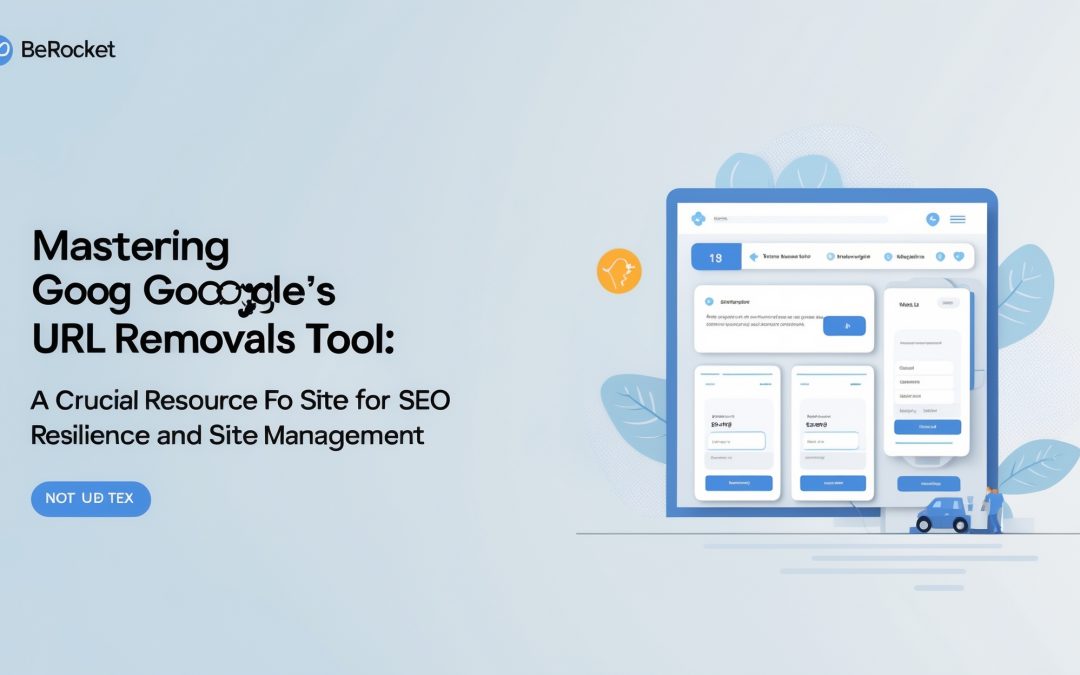
Understanding Google’s URL Removals Tool: A Safety Net for SEO
I must admit, navigating the labyrinthine world of search engine optimization (SEO) often feels akin to wrestling with a hydra. You chop off one head, and two more sprout in its place. Just when you think you’ve got a handle on things, Google rolls out another update or tool that demands attention—like a needy toddler at the grocery store. The latest buzz is about the URL Removals Tool, which has recently gained clarity thanks to John Mueller. Buckle up, because this is more than just a tool; it’s a survival kit for your site’s integrity in a digital landscape fraught with peril. 🛠️
The Basics: Why the URL Removals Tool Exists
The primary function of the URL Removals Tool is to help webmasters remove URLs from Google’s search results. It’s particularly useful when content is outdated, harmful, or, as we’ve seen too often lately, the aftermath of an infamous hack attack. Imagine waking up one morning only to find your website displaying unauthorized content or, heaven forbid, offensive material. Panic sets in, your heart races, and your fingers twitch as you reach for the keyboard. This tool is your digital fire extinguisher.
But let’s dig deeper. What exactly does Mueller elucidate about this tool? To paraphrase his insights, the URL Removals Tool serves as a temporary fix, a band-aid on an open wound that can’t quite heal until the root causes are addressed. It’s designed to clean up messes quickly, but it’s not a substitute for fixing whatever led to that mess in the first place.
Temporary Measures vs. Long-Term Solutions
It’s critical to differentiate between the keyword “temporary” and “permanent” in the context of this tool. When you use the URL Removals Tool, you’re effectively asking Google to set your URL aside—for a short time. The keyword here is *short*. This isn’t a permanent excommunication; it’s more like being put in a timeout. Once the timeout is over, if you don’t fix the issues surrounding the content or the hack, the URL will reappear like an unwanted guest at a party.
Thus, while the tool provides immediate relief, it’s essential to follow up with robust action. I’ve seen it time and again—the site owner breathes a sigh of relief after getting a rogue page removed but then falls into a false sense of security. I cannot stress this enough: Ensure you take the necessary steps to address the vulnerability that allowed such a breach to happen. 🔒
Practical Steps to Use the URL Removals Tool
For those of us who aren’t digital wizards, grasping the mechanics of a tool can resemble deciphering hieroglyphics. But the URL Removals Tool is quite user-friendly, thank heavens! Just head to Google Search Console, find the “Removals” tab, and voilà—you’re presented with options to remove URLs from search results.
Mueller emphasizes that while this tool allows you to submit a request for URL removal, you must ensure that these URLs don’t further propagate the issue. This means revisiting your site’s security protocols, adjusting your settings, and possibly even changing your passwords. Think of it as a digital spring cleaning—refreshing and sharpening your entire online presence rather than merely patching a singular issue. 🧹
Conclusion: Navigating the SEO Minefield
At the end of the day, the URL Removals Tool is an essential cog in the SEO machinery, akin to that one screwdriver you always need but can never find. It brings a semblance of control amidst chaos, and John Mueller’s insights shine a spotlight on its importance, especially in the digital age where hacks can wreak havoc.
I understand the challenges we face in maintaining our online identities, but the key takeaway here is simple: use the tool wisely and responsibly. As a SEO practitioner, I know how tempting it is to believe that a few clicks can erase our digital sins. However, remember that it’s not just about removing the symptoms—like a bad Yelp review—it’s about addressing the underlying issues that caused those symptoms in the first place.
So, if you find yourself staring down the barrel of that ominous hack or unwanted URL, don’t panic. Fire up the URL Removals Tool, but also roll up your sleeves and get to work, because in the world of SEO, the only constant is change—and sometimes, that change isn’t friendly. You’ve got this! 🌟