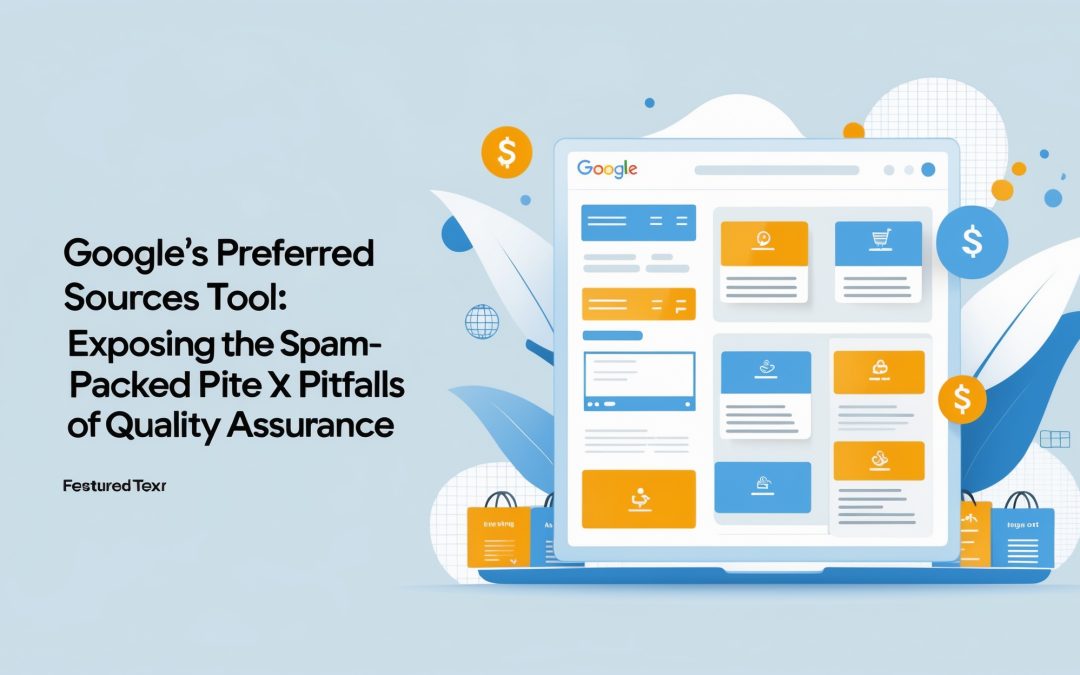
Google’s Preferred Sources Tool: A Struggle Against Spam?
I find myself lead into an ironic twist of fate where the very tool designed to distinguish between quality and unworthy sites has inadvertently turned into a digital dumpster diving expedition. Yes, I’m talking about Google’s Preferred Sources Tool—a supposed haven for high-quality sites that now seems to be filled with spammy domain squatters, leaving us mere mortals scratching our heads in bewilderment. It raises the age-old question: how did we get here? 🤔
The Promise of Quality
With all the chatter about enhancing user experience, the Preferred Sources Tool was heralded as a game-changer, a shiny beacon of hope amid the murky waters of the internet. When I first dabbled with it, I was fascinated by the concept—a selection of sites noted for delivering high-quality content and a user-friendly experience. Bravo, Google! Yet much to my chagrin, it soon became apparent that the reality is a far cry from the idealistic vision it was supposed to represent.
I mean, who doesn’t want to land on a site that promises sanity in a world filled with poorly designed pages and half-baked information? Instead, I often find myself knee-deep in rabbit holes, staring in disbelief at a smorgasbord of spammy URLs intermingled with legitimate contenders. It’s akin to striding into a Michelin-starred restaurant, only to be met by a vendor serving questionable hot dogs in the corner. 🍭
What Went Wrong?
The million-dollar question I grapple with is how Google allowed this chaos to unfurl. The algorithmic giants behind the curtain of this grand illusion seem to have fallen asleep at the wheel. It’s as if they’ve set their ‘spam filters’ to “nap mode” while hordes of questionable domains flood the tool. Just take a moment to appreciate this: a site promising exquisite insights instead leads to a pastiche of low-quality content, remnants of unsuccessful SEO efforts, and a healthy sprinkling of digital grime.
I have conducted my own investigation, probing through this digital landscape, and was met with sheer disillusionment. Many of these sites have opted for the quick-and-dirty strategy of keyword stuffing—purposely churning out incomprehensible articles that barely skim the surface of actual knowledge. The result? Pages that echo with keywords but offer nothing of substance. How am I expected to gain significant insights when sifting through this muck?
The Illusion of Control
As I examined my options, I realized that the glow of control over quality that users were promised was merely an illusion. Google touted a vision where only the best would rise to the surface, but now I see a parade of embarrassingly rudimentary sites engaging in borderline ingenuity. It’s as if the creators of this tool expected all web users to solemnly perform sacrificial offerings while praying to the algorithmic gods. Spoiler alert: digital offerings of spam are not merely “offensive” — they completely warp the entire experience!
Yet, there exists a palpable sense of frustration bubbling among bloggers and content creators everywhere—why should we toil tirelessly to curate meaningful, impactful content when it seems that the floor is open for spammy domain squatters? This sense of injustice is palpable, as we scrutinize our analytics with a wistful longing for the glory days of straightforward search excellence.
Our Digital Future: The Road Ahead
So, what lies ahead in this chaotic landscape? I fundamentally question the efficacy of Google’s Preferred Sources Tool, and I wonder if it might just take a miracle—or perhaps a more intuitive algorithm—to rectify the precipice upon which we find ourselves teetering.
The notion of diligent content curation should not be overshadowed by spammy competition. It beckons a collective re-evaluation of what it means to be a “preferred source.” We must rally around the idea that quality matters. It shouldn’t simply be about stuffing keywords into every second word; it should focus on delivering compelling information that enlightens or entertains the viewer. 💡
In our digital age, I believe we deserve a better tool—one that lifts genuine, high-quality sources above the murky waters of spam. So, I keep my fingers crossed and my eyes peeled for an improvement. Google, if you’re listening, consider this a rallying cry from your user base! Let’s put the “quality” back into “preferred”—and do away with the dubious domain squatters that have taken up residence in your Preferred Sources Tool.
In the end, we can only hope that our quest for genuine knowledge isn’t derailed in the endless spam fog, but rather leads us toward a vibrant digital future. After all, our popcorn and hot dogs deserve to coexist with Michelin-star recipes, don’t you think? 🍿