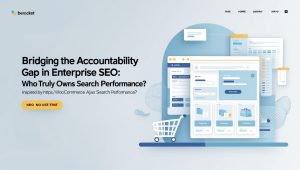
Who Owns SEO In The Enterprise? The Accountability Gap That Kills Performance
In the vast, chaotic landscape of enterprise-level operations, one of the burning questions consuming the minds of digital marketers is – who exactly owns SEO? I know, it’s almost like pondering the deeper mysteries of the universe, and trust me, the answer is just as elusive.
SEO, that all-important algorithmic sorcerer, is no longer a straightforward task relegated to the tech-savvy nerds in the back room. With AI-driven search technology remolding our understanding of visibility and accessibility, the stakes have never been higher. Yet, amidst this digital upheaval, there seems to be a concerning oversight – an accountability gap that not only confounds the ownership debate but also cripples performance. 😱
The SEO Accountability Conundrum
I understand that SEO is often fragmented across several departments within an enterprise: marketing, IT, content creation, and UX. Each group champions their own set of responsibilities, leading to shared tasks that can stretch thin into the abyss of ambiguity. Who’s responsible for keyword research? Is it the content team? SEO specialists? Or perhaps the marketing department? I can’t help but shudder at the thought of multiple people grappling for ownership, and, subsequently, nobody really owning the end result.
The real killer here is that accountability doesn’t simply mean a name on a document; it translates directly to the search performance metrics that a business looks to for growth and visibility. If, for instance, the content team creates a beautiful piece of copy but neglects to optimize for SEO, what good does it do?
💡 It’s like planting a seed in barren soil— you have to nurture it with all the right components to yield results.
The Rise of AI and the Evolving Landscape
Let’s address the dragon lurking in the room: AI. With machine learning algorithms revolutionizing the game, SEO has become more intricate than ever. I can’t stress enough how vital it is for enterprises to adapt quickly. AI isn’t just for fancy chatbots anymore; it’s shaping search results in real-time. This elevates the necessity for a sound SEO strategy underpinned by a clear sense of ownership.
What I find truly disheartening is that many enterprises still cling to old myths. The belief that simply chucking a few keywords into a blog post guarantees visibility is outdated. SEO is no longer a solo sport, but rather a collective endeavor—a team relay race, if you will. Each department has to pull its weight while keeping its eyes on the finish line. Yet, without concrete ownership and accountability, it’s like running with a blindfold. 🏃♀️
Navigating the Accountability Gap
So, how do we bridge the ever-widening accountability gap? I believe it starts with a cultural shift within an organization. Clear roles need to be defined. But not just defined—they need to be accepted and taken seriously. The SEO strategy should be an integrated part of the business strategy, not just an add-on or afterthought.
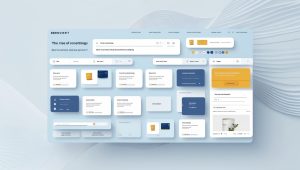
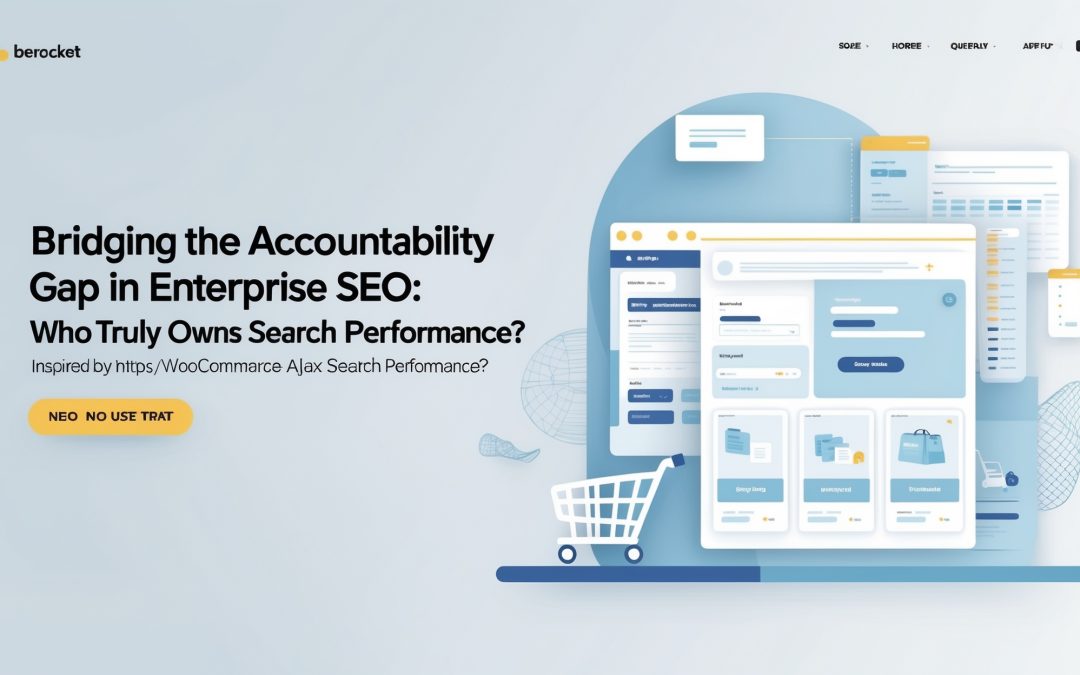
Companies could implement regular inter-departmental meetings to discuss performance, objectives, and optimizations. What I find incredibly effective is a shared dashboard. It allows teams to visualize the performance metrics in real-time. This visualization not only fosters collaboration but encourages a sense of ownership over mutual goals. I can only imagine the positive impact this would have on morale and productivity across the board. 🎯
In an era where every click counts, integrating key player accountability into SEO processes is no longer just a ‘nice to have.’ It’s a critical business necessity.
Final Thoughts: A Unified Approach Is Key
I think we need to shift our perspective from seeing SEO as a mere task assigned to a department to recognizing it as a core business function that requires unity, collaboration, and most importantly—ownership across all fronts.
If enterprises can successfully navigate this accountability gap, they can ensure consistent visibility and performance that is both sustainable and profitable. It’s time to break down the silos, learn from each other, and start viewing SEO as the powerful, collective endeavor that it is—because after all, the digital universe is not going to wait around while we figure it out.
Let’s take ownership of our digital destinies. 🚀