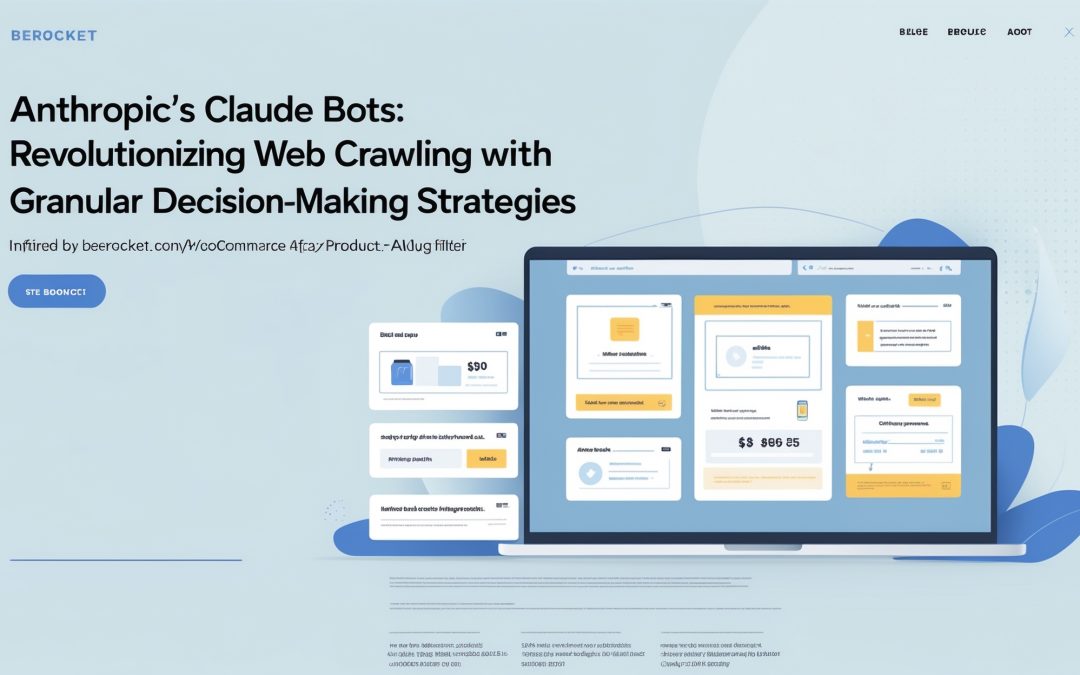
Unpacking Anthropic’s Claude Bots: A Leap Towards Granular Decision-Making
I know that when we talk about the evolution of AI and its myriad applications in web crawling and indexing, it’s akin to discussing the growth of a teenager, all awkward limbs and unpredictability, coupled with a hint of brilliance. Today, let’s delve deep into the recent update from Anthropic regarding their Claude Bots and the implications it carries for webmasters and site owners alike.
The New Age of Bot Granularity
Anthropic’s decision to split its Claude bots into distinct categories—training, search indexing, and user requests—marks a significant shift towards a more meticulous and nuanced approach to web crawling. Gone are the days of all-encompassing, one-size-fits-all bots. The new granularity means that different bots now have specific functionalities, much like assigning roles in a theatre production. Every actor has a part to play, and each bot will fulfill its designated task with precision.
But what does this mean for us? 🤔 It seems we’re finally shaking off the shackles of chaotic data retrieval strategies that often lead to blanket crawls that overlook the nuanced boundaries set by website owners. This granular approach understands that information is not just data; it’s a tapestry woven together with intentions, objectives, and privacy concerns.
Training, Indexing, and Decision-Making
So, let’s break these categories down further, shall we?
1. **Training Bots**: These bots focus on gathering data to enhance the machine learning models of Claude. Think of them as the diligent students scouring the library for relevant texts to improve their understanding of the world. They digest information and adapt, learning from each byte they consume.
2. **Search Indexing Bots**: These are the ones that will either make or break a website’s visibility. Their primary role is to decide how the pages get indexed in search results. The implications here are enormous since a well-indexed page is akin to having a well-placed billboard on a bustling street—it gets noticed. With this update, we can breathe a little easier, knowing there’s a specific mechanism to leverage our content effectively.
3. **User Request Bots**: Ah, the live-action thrillers of the bot world. These bots respond to real-time inquiries, acting almost like the friendly librarian who assists you in your quest for knowledge. Their focus may be narrower, but the efficiency they bring to the table can significantly enhance user experience. Imagine searching for something online and not having to sift through a deluge of irrelevant results. Sounds delightful, doesn’t it? 🌟
Trade-offs and Visibility
Now, while this all sounds fabulous and futuristic, I must mention that with great power comes equally great responsibility, or, dare I say, trade-offs. Isn’t that how the universe works? If website owners choose to block certain Claude bots, they’ll have to contend with the possibility of diminished visibility. This isn’t an arbitrary decision but rather a strategic gauge: how much do you value your data’s privacy versus the potential influx of traffic?
It’s a balancing act akin to teetering on a tightrope stretched high above the ground. On one hand, your data remains guarded, wrapped in a warm blanket of anonymity. On the other, that protection can leave you stranded in the hidden corners of the internet, where search traffic sulks in obscurity.
Considerations Moving Forward
As I reflect on this, I can’t help but wonder what this means for the future of digital content.
1. **Content owners need to be proactive**: If you’ve got a website, you need to be on your toes, determining which bots to allow access to your content. This newfound custody over visibility demands webmasters dig into the finer details of their site’s crawler configuration.
2. **A push for transparency**: There’s a growing need for clearer communication from AI about how data is processed and what rights owners have. In this age of digital partnerships, knowledge is power. And if you’re not aware, you risk becoming just another cog in a beautifully executed robotic ballet.
3. **Wider implications for AI development**: As AI continues to evolve, decisions made today could shape how our digital environment transforms in the years to come. Are we nurturing a symbiotic relationship, or are we merely opening Pandora’s box?
The Bottom Line
Ultimately, Anthropic’s updated crawler documentation isn’t just an innocuous tweak in the ever-evolving saga of AI. It signifies a broader, more responsible approach to how we navigate the digital landscape—where precision takes the front seat, and the gray area of overlapping functionalities starts to melt away.
As I wrestle with these thoughts, I can’t help but feel a mix of excitement and apprehension. The future of web indexing may be brighter and more tailored, but it’s also fraught with challenges that demand close attention. Always remember, in this digital age, it’s crucial to keep your eyes peeled. The world of bots is intricate, mysterious, and forever changing. 🚀