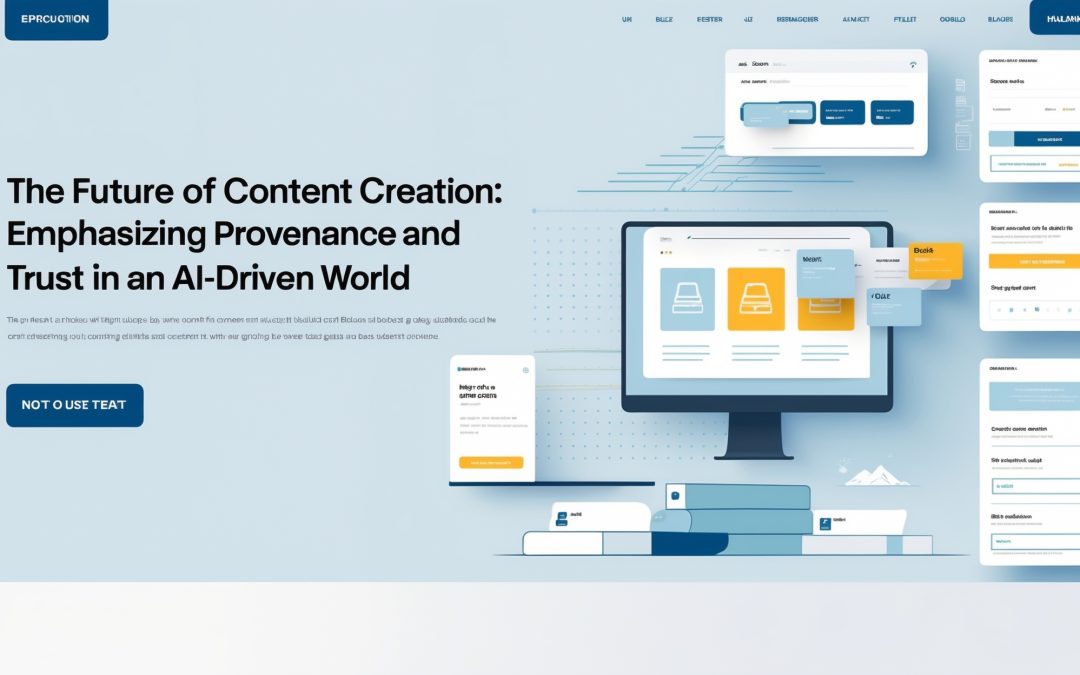
The Future Of Content In An AI World: Provenance & Trust In Information
I’ve been pondering the future of content creation in a world increasingly dominated by AI. It’s like staring into the abyss of a swirling digital storm, where the lines between genuine creation and algorithmic fabrication blur into an indistinct haze. There’s a rising tide of questions surrounding the authenticity and trustworthiness of information in this brave new world we’re stepping into. 📉
In a time when anyone with a Wi-Fi connection can claim to be an expert, understanding the provenance of content becomes not just important, but essential. I am reminded of how it feels like the age of misinformation is upon us, where facts can be weaponized, and context is often sacrificed on the altar of virality. Emily Anne Epstein offers invaluable insights into navigating this murky terrain; after all, in the labyrinthine depths of the internet, not just any content has a place.
What Is Provenance and Why Should We Care?
Provenance, by definition, refers to the history of ownership of a valued object or work of art. But when I think of its application in the realm of content, it morphs into a question of where information comes from, who wrote it, and what biases might be wrapped up in the source. With AI-generated content sprouting like weeds, the urgency to elucidate the origins of information has never been more pressing.
As content creators, we are not merely flowing with the digital current; we are navigating treacherous waters. I believe that maintaining a clear understanding of provenance can establish a much-needed framework for trust. In the face of sensational headlines, click-bait articles, and disinformation campaigns, I’m committed to being a beacon of integrity. 💡 I know that in a world inundated with noise, the audience yearns for clarity and honesty.
The Content Creator’s Dilemma
It’s a veritable minefield out there. As content creators, we find ourselves caught between the desire to attract eyeballs and the moral obligation to offer real value. This isn’t just about chasing metrics or amusing algorithms; it’s about building a lasting relationship with our audience based on trust.
Epstein points out that with provenance comes the responsibility of ensuring the authenticity of what we produce. We must audit our sources and reaffirm their credibility. It’s a strategy akin to putting on shin guards before stepping onto the pitch—it protects us in the long run. The moment we prioritize audience trust over short-term gain, we illuminate a path that not only sets us apart but also sets the stage for a more ethical content landscape.
I often ask myself, “What kind of content do I want to create in this chaotic digital age?” The answer is as clear as day: I want to build content that stands the test of time, firmly planted on the bedrock of rigorous research and thoughtful execution.
Navigating AI’s Influence
AI has the potential to revolutionize content creation, yet it also invites a peculiar paradox. On one hand, it streamlines the creation process, manages data, and provides us with insightful analytics; on the other, it threatens to overwhelm us with a deluge of shallow, regurgitated material. The very authenticity we seek may be jeopardized if we allow machines to dictate the narrative.
As a content creator, I recognize that embracing AI can enhance my workflow, but it should never infringe upon my commitment to accuracy and authenticity. I must view AI not as a replacement for creativity, but as a tool that can improve the quality of the content I produce.
Building a Trustworthy Digital Ecosystem
In this AI-fueled landscape, the essence of trust emerges as the sacred currency of the digital economy. I view myself as a custodian of knowledge, and with that role, I believe I hold the responsibility to promote provenance and transparency. Content creators must emphasize the need for clear sourcing, akin to assembling a jigsaw puzzle where every piece plays a critical role in forming a harmonious image.
Moreover, it’s crucial to promote collaboration within the content creator community. By sharing resources, insights, and best practices, we pave the way for an environment where authenticity flourishes. Together, we can cultivate an ecosystem that champions quality over quantity, and in doing so, we turn the tide against the stochastic chaos of superficiality. 🌱
In the final analysis, I maintain that the future of content creation in an AI world lies in provenance and trust. By anchoring ourselves in authenticity, fostering a sense of responsibility, and harnessing the partnership potential of AI, we can prepare ourselves to meet the challenges of tomorrow head-on. It’s an audacious path, but as we stand on the precipice of this new era, it seems the only way forward is with integrity firmly in our sights.
So, let’s embrace this journey with open hearts and keen minds because the future of content, if we so choose, can be as bright as our commitment to honest and reliable information. 🌍