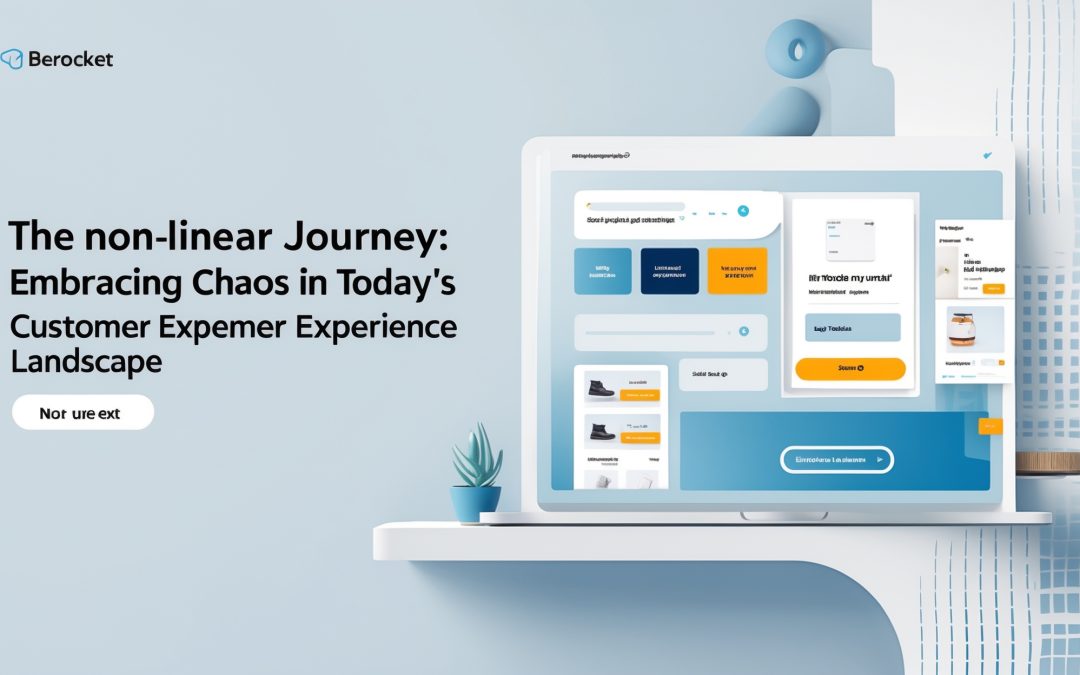
The Non-Linear Odyssey: Understanding the Modern User Journey
I have to say it: the customer journey is as tangled as a pair of headphones you stashed in your pocket after that raucous festival last summer. The notion that people methodically traverse from awareness to consideration, culminating in that glorious moment of conversion? Well, throw that archaic blueprint out of the metaphorical window because the journey isn’t linear anymore—it’s a chaotic, always-on experience driven by digital landscapes and AI insights.
The Traditional Funnel is Dead
Let’s take a moment to slap the traditional sales funnel in the face and watch it tumble into oblivion. The idea of a straightforward path from discovery to purchase has been obliterated by a cocktail of incessant online distractions and the omnipresence of technology. 🌀
With a swipe of a finger, customers flit between research, comparison, and a casual debate with their inner monologue about whether they really need another pair of shoes. Spoiler alert: they don’t need another pair, but there’s a sale, and it’s shiny, and it’s oh-so-tempting.
Decision-making has suddenly revealed itself to be less of a step-by-step process and more of a chaotic whirlwind, where customers bounce around between platforms and preferences like kids on a sugar high. I get it. You find one article that piques your interest, you open ten tabs, you get distracted by cat videos, and then bam—an ad pops up, leading you down yet another rabbit hole of enticing products.
Enter the Age of AI
And this is where the plot twist lies: artificial intelligence has unmasked the fluidity of our interactions. Since when did a mere chatbox or recommendation algorithm become my unofficial shopping therapist? But here we are. AI is sprouting like weeds in the digital garden, powering insights, recommendations, and predictive analytics that help businesses understand not just who their customers are, but also how they think.
Let’s be real; it’s nothing short of a technological marvel. I can tell you from experience that when brands leverage AI efficiently, the consumer experience morphs from mundane to mesmerizing. This isn’t just about a product recommendation based on my last purchase—oh no. It’s an entire ecosystem around me—suggesting things I didn’t even know I wanted. It’s almost intrusive, yet simultaneously wonderful.
The Always-On Experience
Now let’s dive into what “always-on” tactics mean in this context. I’ve realized that customers want convenience that flows seamlessly through their lives. We all have busy schedules that resemble a game of Tetris, with blocks stacking precariously until they threaten to crush us. So, if I can get a real-time suggestion on my phone while I’m chaotically juggling my responsibilities, you bet I’m going to respond.
And that includes chatbots operating on the fringes of our sanity 24/7. I know for a fact that the quicker I can get credible information about a product or service, the less likely I am to abandon my quest for consumption. This instant gratification factor is the lifeblood of an always-on consumer base. 🕒
Brands must be ready to respond. The truth is, I’m annoyed with brands that don’t engage me when I’m on their site. If I stumble upon a product that looks intriguing, but I can’t find any straightforward answers, I might just hit the back button harder than a disgruntled customer.
Navigating the Tangled Web
So, what does this mean for businesses? Marketers should ensure their online presence is rich, engaging, and responsive. Consumers are taking control of their journey, after all. They demand personalization based on their habits and interests. I will not settle for generic ads anymore—give me tailored experiences, not just a spreadsheet of my last purchases.
The modern landscape means understanding that a user’s path can divert in a multitude of directions. Companies need to think strategically but allow flexibility in their approach. 💡 It’s essential to create content that resonates with various stages of that non-linear journey. Your content should not simply read like a sales brochure, but rather echo the genuine engagement your audience craves.
Ultimately, the non-linear journey signifies that brands need to pivot from a one-size-fits-all mindset to a fluid, adaptable strategy. This allows you to meet customers precisely where they are and give them what they need before they even know they need it.
Wrapping Up
The customer journey is no longer about following a blueprint; it’s an electrifying maze of choices, distractions, and serendipitous discoveries. I think we should embrace the chaos and dance alongside our customers in this new frontier, crafting meaningful experiences at every turn. After all, moving with the flow rather than resisting it is what keeps us relevant in a world that’s never truly off. So, let’s navigate this dance together, one non-linear twist at a time! 💃