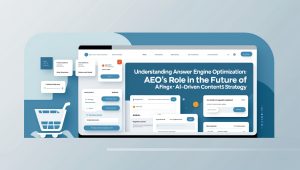
Understanding Answer Engine Optimization (AEO): The Next Evolution of AI Search
Ah, the murky waters of online terminology. If you’ve recently encountered the phrase “Answer Engine Optimization” (AEO) and felt your eyebrows raise in confusion, trust me; you’re not alone. It seems like every week there’s a new acronym buzzing around the internet toolkit—AIO, GEO, LLM visibility—honestly, it can feel like we’re witnessing the birth of a bureaucratic nightmare. 🎭
But fear not! Today, I’m here to unravel this cryptic web and tell you what AEO means and why it matters. Spoiler alert: it’s largely an extension of good old SEO, intertwined with the nuances of writing to create content that’s not just human-readable but also AI-friendly.
What Is Answer Engine Optimization (AEO)?
To put it plainly, Answer Engine Optimization involves tailoring your content for AI systems that generate answers. Think of it as SEO for the AI realm; it’s not about boosting traditional search rankings anymore but optimizing your content to be understood, cited, and recommended by AI tools.
But why all the fuss? Well, AEO dives into the nitty-gritty of understanding how your brand is mentioned, cited, or even recommended by these AI engines. Terms like “mentioned” versus “cited” boil down to subtle but impactful differences. When your brand gets merely mentioned, it’s part of the conversation. When it gets cited, it serves as a direct source. And when it’s recommended? That’s when you’ve hit the jackpot because the AI is actually nudging users toward your valuable content. 🏆
The Landscape of AI Answers
So where exactly do these ubiquitous AI tools pull their answers from? The answer is a delightful smorgasbord of information collected from various sources:
1. **Company Websites**: Fantastic news for smaller brands! Your informative articles, product pages, and blogs can be excellent resources directly cited by AI systems.
2. **Independent Sources**: Reviews and publications add a crucial layer of authority, featuring your brand without your direct input. It’s like having a friend advocate for you without asking.
3. **Communities and Social Platforms**: Reddit, YouTube, and the like play a variable role depending on the topic. Trends shift rapidly though, so chasing the latest platform fad may not be fruitful. For instance, Reddit’s visibility in AI answers plummeted recently. 🐉
Feeling the need to keep up with the Joneses? Instead of fixating on the hottest citation trend, focus on nurturing your own content first. It’s about building relationships with your audience in the spaces they already trust.
Seizing Opportunities as a Smaller Brand
I’m sure you’ve heard that “bigger is better,” but here’s the kicker: smaller brands have an edge, too! While larger companies may enjoy a broader digital footprint, smaller entities often possess a more profound connection to their audience. You know their concerns, their specific queries—the precise nuances that these monolithic brands might overlook.
Don’t fret about outshining a giant in terms of quantity; be the shining beacon of clarity and specificity in your niche. Tackle your customer’s frequently asked questions head-on with undoubtedly targeted content. It’s not about shouting the loudest; it’s about offering the clearest, most helpful answers. 💡
Crafting Responses that Matter
Let’s take a practical example—a user types, “What’s the best website builder for a small bakery?” The answer they need usurps various interconnected queries regarding pricing, features, and usability. The AI’s task isn’t straightforward; it’s like a little brainstorming meeting behind the scenes.
If your content merely scratches the surface, you risk missing out on providing the comprehensive answers users are craving. Learn to anticipate those follow-up questions and address them alongside your primary response. Just don’t drown in the sea of potential queries; a focused approach is what wins the day.
The Differentiation: AEO vs. SEO
Now here’s the crux: AEO and SEO cohabit the digital landscape but have divergent missions. Traditional SEO is about amassing clicks from search results, while AEO is more about earning mentions and citations in AI-generated answers. So, you see, AEO integrates seamlessly with SEO rather than snatching its throne.
Fundamentally, what assists users and search engines in understanding your content is also what helps AI systems offer apt citations and recommendations. The basics of SEO continue to underpin this evolving field, proving that while techniques may pivot, the core ethos of creating helpful, well-structured content remains timeless.
Measuring Your AEO Success
One perplexing aspect of AEO arises in the method of measurement. Tools like OtterlyAI can give you insights into your mentions and citations in AI-generated responses, while usual traffic analytics clarify whether those citations translate into actual visits.
But what if your budget is tighter than your last pair of jeans after the holidays? No problem! A spreadsheet can be your best friend. Here’s a simple way to spy on your AEO visibility. Record questions your customers often ask and check how your brand performs against others. Are you being portrayed accurately? Are your citations favored?
As we traverse this wild landscape of AEO, I find it exhilarating and slightly daunting. What’s clear, however, is the emphasis on delivering clear, actionable information. With thoughtful content creation and an awareness of how AI influences behaviors online, any brand—be it towering or tiny—can harness the change. The future beckons; are you ready to answer? 🌟