The
AI Documentation Dilemma: A Real-World Solution
In an era where information is updating faster than my mood on a Monday morning, there are few things more exasperating than dealing with stale, outdated documentation. As someone who has spent countless hours sifting through labyrinths of web pages, trying to decipher a product’s proper functionality, I can tell you firsthand how frustrating it is to receive conflicting information from a support agent. Then comes the AI revolution—big promises, high expectations, and a continual dance of human versus machine. The stakes have never been higher!
David Wilson and the AI Odyssey
Enter engineer David Wilson, a man who sought to solve this chaos head-on. Imagine a scenario where a customer, brimming with hope, contacts a company’s support agent only to be met with the robotic indifference of an AI system with last year’s data. Just drip the salt on that fresh wound, right? Wilson understood this dilemma all too well and took it upon himself to bridge the chasm between outdated documentation and the valuable, up-to-the-millisecond data we crave.
What Wilson did was both simple and radical—he harnessed the power of AI to revamp product documentation, ensuring it was not only current but also relevant. I mean, how audacious! 🌟 He aimed to allow Woo’s support agents to dispense accurate information to customers based on the freshest updates. A noble cause if there ever was one.
The Challenge of Up-to-Date Information
Now, I think we can all agree that an AI’s usefulness is limited by the quality of the data pump it’s using. If an AI algorithm is fed information from 2021, it’s like trying to navigate using a map from 1990. Sure, there will be some familiar landmarks, but good luck finding the nearest Starbucks! ☕
Wilson’s insight was clear: no matter how sophisticated the AI, if the underlying documentation is stale, that sophisticated tech becomes utterly futile. The implication is crystal clear—an AI’s answer is only as up-to-date as the documentation it utilizes. It seems simplistic, but in a world that thrives on instant gratification, such a revelation can be game-changing.
A New Frontier for Customer Support
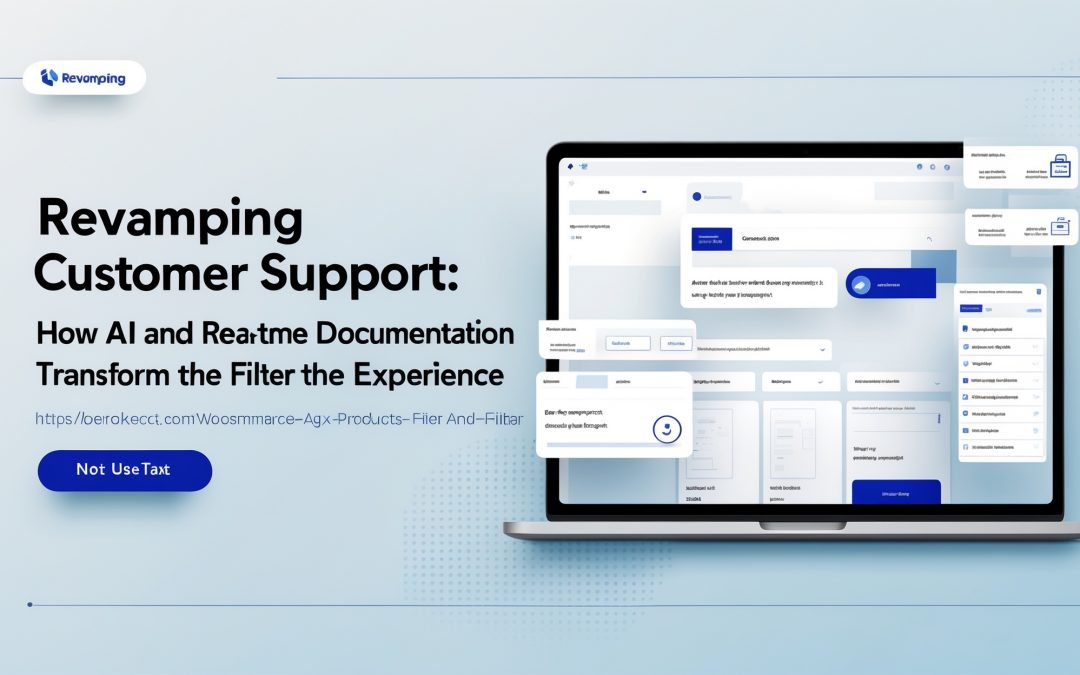
What Wilson brought to the table was a two-pronged approach: first, he overhauled the existing documentation, ensuring that it was consistently updated in real-time. This meant that whenever a product feature or function changed, the documentation would reflect those changes without delay. Suddenly, the support agents at Woo weren’t just spouting potentially useless drivel, but rather they became valuable, expert resources for customers. The whole structure shifted, from being a mere facilitator of information to a consultant with real value. How refreshing! 🌍
Secondly, Wilson integrated an AI system that couldn’t just parrot what it was told, but learned—adapting based on fresh input and customer inquiries. The key to this? Iterative updates and constant feedback. If the AI’s response wasn’t consistently within the realm of practicality, it was fine-tuned, reprogrammed, and optimized until it became a genuinely helpful tool.
The Results: A Symbiotic Relationship
As a direct result of this overhaul, Woo’s customer support transformed. Gone were the frustrations of conflicting answers and outdated tutorials. Customers began to feel valued, thanks to support agents who were no longer in the dark but were instead champions of accurate information, empowered by effective AI systems. 🤖
I know what you’re thinking: “This sounds fantastic, but how replicable is this method in other sectors?” The beauty of Wilson’s approach is its scalability. Whether you’re an engineer in tech or a manager in retail, the principles remain the same. I believe that anyone looking to revamp their customer support should consider integrating AI tools that adapt and evolve alongside their knowledge bases.
Concluding Thoughts: The Future is Bright
Reflecting on Wilson’s initiatives, I find a sense of revitalization in the world of customer interactions. The conversation surrounding artificial intelligence often oscillates between fearful overhypes and mind-numbing complexities. Yet, at its core, effective collaboration between humans and AI can elevate customer support from the shadows of mediocrity to the light of excellence. It’s a brave new world, and with pioneers like David Wilson leading the charge, I feel optimistic about the future.
So the next time you find yourself at the mercy of a support agent—or an AI—remember: a well-informed agent armed with current documentation can make all the difference. Cheers to progress! 🎉