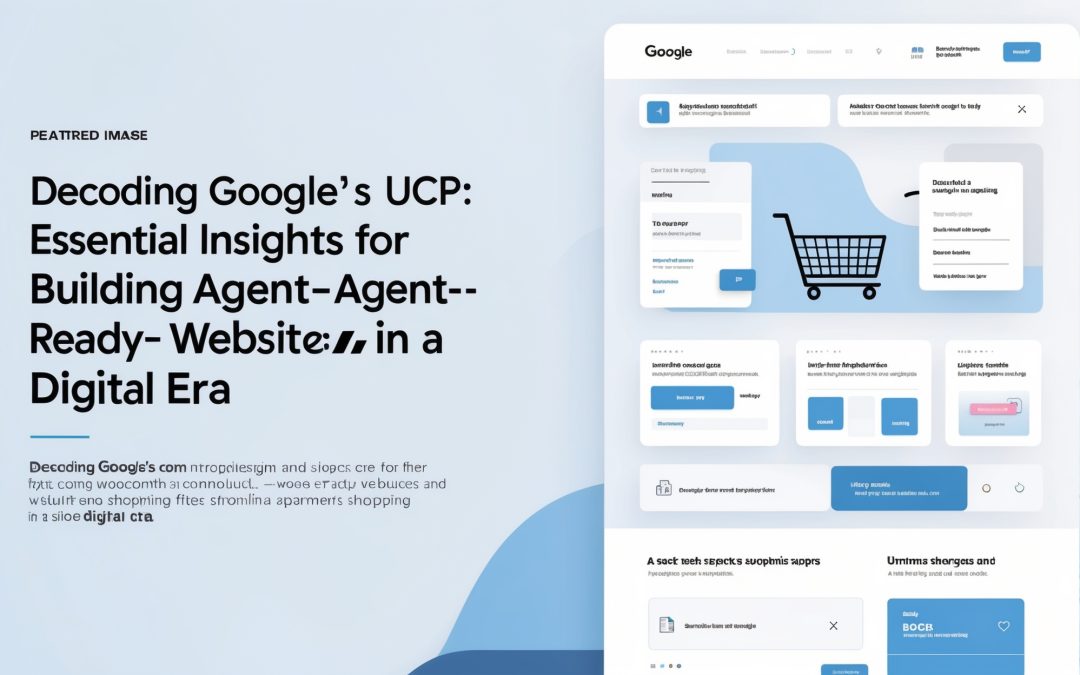
Decoding Google’s UCP: The Blueprint for Agent-Ready Websites
Let’s get one thing clear: the digital landscape is a ruthless jungle where only the fittest survive. And in this battleground, websites must adapt or perish. Enter Google’s Universal Commercial Platform (UCP)—an audacious attempt to redefine what it means to be an “agent-ready” website. But what does this mean for the ordinary site owner? Believe me, it’s more crucial than ever to understand the architecture that underpins these digital knights in shining armor.
What on Earth is an Agent-Ready Website?
I used to think the term “agent-ready website” was just another flashy buzzword thrown around by tech evangelists who sip lattes while gazing at the latest data on their shiny laptops. But that’s not the case. An agent-ready website is designed to seamlessly integrate with digital agents—think Siri, Google Assistant, and the myriad of chatbots that might actually be more intelligent than some of us humans.
Why is this integration so vital? Well, in the world of fast-paced consumer decision-making, time is a luxury nobody can afford. An agent-ready website can respond to queries quicker than I can scroll through my social media feed on a lazy afternoon. This capability not only saves time but also enhances user experience, serving as a firm handshake in the unforgiving business of online retail.
The Pillars of the UCP Architecture
Let’s dive into the meat and potatoes of Google’s UCP. At its core, the architecture emphasizes flexibility, scalability, and user-centricity. These are three concepts that any site owner should greet with a warm and open heart.
Flexibility: Can your website adapt when the tides of technology change? Online consumer behavior shifts constantly, and if your website isn’t nimble enough to catch that wave, it’s time to reevaluate your digital strategy. Google’s UCP is designed for this very adaptability, allowing websites to incorporate emerging digital behaviors and preferences effortlessly.
Scalability: Think big. Your website is not just a storefront; it’s a veritable castle in the digital kingdom. As your customer base expands, so should your website’s capabilities. The UCP framework supports scalability, meaning you won’t be forced to tear down the entire structure when you decide to add a new feature or service.
User-Centricity: In a world buzzing with distractions, a user-centric approach is not just ideal; it’s mandatory. Google’s architecture champions the user experience, making the online journey so smooth that users won’t even notice the rough edges that usually come with digital commerce.
Lessons for Every Website Owner
So, what can we glean from all this? For every website owner, whether you’re running a sprawling e-commerce site, a local bakery, or even a minimalist blog about your cat’s adventures, there are nuggets of wisdom to be capitalized on.
1. **Interactivity is Key**: It’s not enough to shout into the digital void. If your site doesn’t engage with users actively, it’s time to consider some revamping. Think about voice search, instant messaging options, and personalized recommendations.
2. **Data is Your Friend**: You can’t optimize what you don’t measure. By using data analytics effectively, you can discern user behavior, preferences, and pain points. Google’s UCP emphasizes strategic data use, and you should too. 📊
3. **Design for Change**: The internet evolves at lightning speed, and your website should be no different. Consider building a structure that is adaptable for tomorrow’s tech. Websites should empower you—not become a burden through obsolescence.
4. **Make It Mobile-First**: With the bulk of web traffic now happening on mobile devices, if your website isn’t mobile-friendly, you might as well be screaming into a black hole. The UCP puts mobile accessibility at the forefront, and every other website should follow suit.
5. **Security Matters**: As online threats continue to evolve, the safety of your website should never be an afterthought. Google places immense value on security features, and so should you. A secure site not only protects your business but also fosters trust among your users.
A Glimpse Towards the Future
In closing, Google’s UCP is more than just a cutting-edge framework; it’s a signpost pointing towards the future of digital commerce. For those of us who might still be figuring out the intricate web of online presence, grasping these concepts is a stepping stone towards not only survival but thriving in the online realm.
This next chapter of the digital journey is bound to be exhilarating, and I, for one, can’t wait to see where it takes us. As the digital tide rises, let’s ensure our websites are not left behind in the flotsam and jetsam that trails behind innovation. Adapting is not just a choice, it’s the only way forward. 🌍