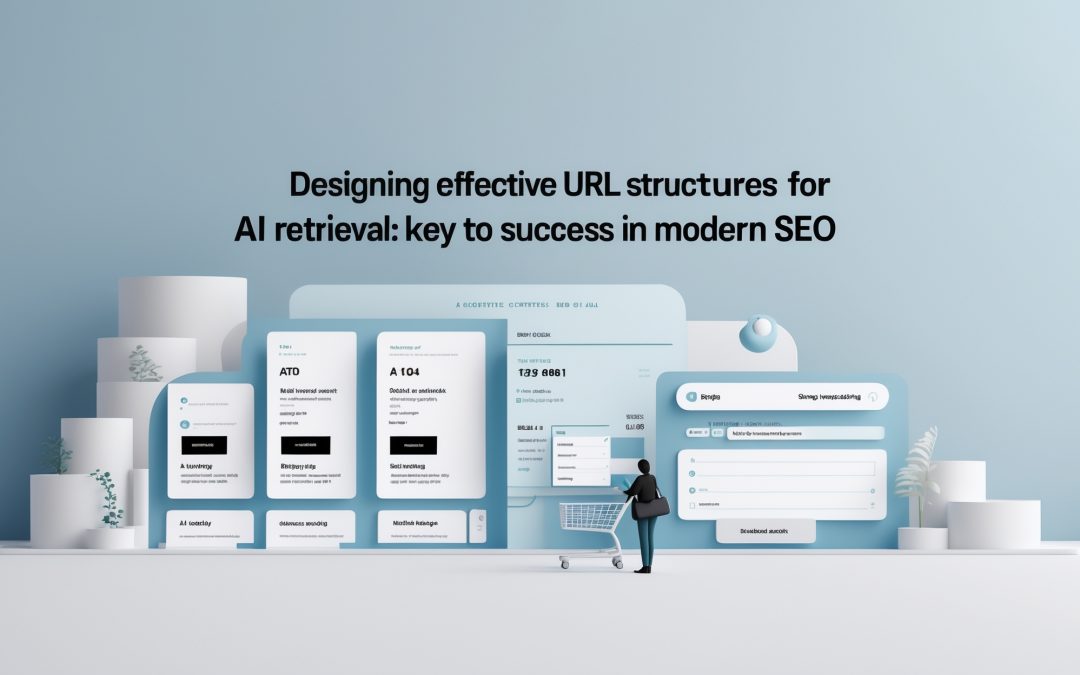
Designing URL Structures for AI Retrieval: A New Era in SEO
As I sit here, reflecting on the intricate web of influences that shape our online experience, it strikes me just how pivotal URL structures have become in the latest SEO landscape. It feels like we’ve crossed a threshold into a multiverse where not only human users roam the digital expanses, but also sophisticated AI entities—each scouring our carefully constructed web pages with algorithms so advanced that they practically have a mind of their own. It’s not just about rankings anymore, folks. It’s about crafting URLs that can be easily retrieved by AI. 😲
The Evolution of URL Structures
Remember the days when a well-crafted URL was about stuffing in keywords and hoping for the best? I know I do. Those were simpler times when traditional SEO tactics ruled the roost. We had neat little formulas and best practices: a mix between a catchy slug and maybe a dash of keyword wizardry to drive traffic. While those tactics still hold some water, we’re now faced with an era where AI plays a leading role in search.
Google’s algorithms—once mere puppets to rank and relevant content—are now equipped with the cutting-edge AI tools, almost like they’ve been plugged into the matrix, gaining a level of consciousness. 🤖 The stakes are higher now, with AI shifting the goalposts for everyone involved in the online game.
Why URL Structure Matters Beyond Simple Rankings
I often hear people wondering, “Why should I care so much about my URL structure? Doesn’t it just redirect to my main content?” Well, let me break it down for you: URLs are the breadcrumbs that guide AI through your website’s forest. A well-structured URL that is both succinct and meaningful not only tells the search engine what’s inside but also allows AI systems to retrieve content more efficiently. It’s like a digital compass—without it, even the most sophisticated AI tools can get lost in the labyrinth of the internet.
Imagine your URL like a well-written headline. It needs to encapsulate the essence of what the reader (or AI) will discover. If your URL is vague and disorderly, how can you expect any AI to discern the value of your content? Think about it.
Structuring for Clarity
When I’m creating a URL, I prioritize clarity above all else. Think about what your core message is and distill it into a URL that reads well and makes sense. Incorporate relevant keywords, but don’t go crazy with them; remember, you’re not trying to jam a square peg into a round hole.
For example, instead of “www.example.com/2023/04/post123456,” you could optimize it to “www.example.com/how-to-design-url-structures.” See the difference? One screams confusion, while the other is practically a neon sign saying, “Hey, come learn how to design URL structures!” 🌈
The Role of Keywords
I get it. Keywords are like the lifeblood of SEO, and while they still hold significant weight, the focus is expanding. AI doesn’t just look for keywords; it looks for context and relevance. So make sure to incorporate them naturally, but don’t force them in like an awkward party guest who won’t leave. A well-thought-out URL that reads naturally is more likely to resonate with AI retrieval systems.
Smaller is Better
In the fast-paced world of digital content, brevity carries its weight in gold. A shorter URL is not only easier to remember; it also conveys the main message more effectively. As I curate my own URLs, I often find that simplifying and shortening can lead to richer user engagement.
Instead of an unwieldy journey that starts with over-explanation, aim for something concise. After all, with AI now being able to recognize patterns in data faster than I can say “Links are life,” why would you voluminously clutter what could be a sharp, enticing URL?
Visualize Your Structure
I think we can all agree that a well-structured URL can evoke a sense of organization. Use forward slashes to create directories without rambling on unnecessarily. Consider how your audience interacts with your content. If you’re offering a series of related posts, it’s beneficial to create subdirectories that make browsing feel like a guided tour rather than a haphazard stumble through a quagmire. 🗺️
Conclusion: The Future is Now
In a world increasingly dominated by AI, understanding the importance of URL structure isn’t just beneficial—it’s essential. By optimizing URLs for both human readers and AI retrieval, we’re not only paving the way for better rankings but also ensuring that our content is discovered and appreciated in this brave new digital universe.
So the next time you sit down to craft a URL, I urge you: think like a digital pioneer. Be clear, be relevant, and keep it snappy. Not only will you capture the attention of algorithms with laser focus, but you’ll stand at the forefront of a revolution that marries simplicity with technology. ✨